
Digital public goods
People deserve the best tools
Croma builds digital public goods for Latin America: open software on public data, free for people and ready for governments to adopt. Paradero, for getting around Bogotá. Ventanilla, for understanding government services in Colombia, El Salvador and Argentina. And a tourism guide to El Salvador in four languages.
- 3
- countries with Ventanilla: Colombia, El Salvador and Argentina
- 9
- indicators of the Digital Public Goods Standard guide every decision
- 0
- ads, accounts or tracking. You open it and that is it
- MIT
- open license: anyone can use, study and improve the code
Paradero · Bogotá
Your bus, without guessing
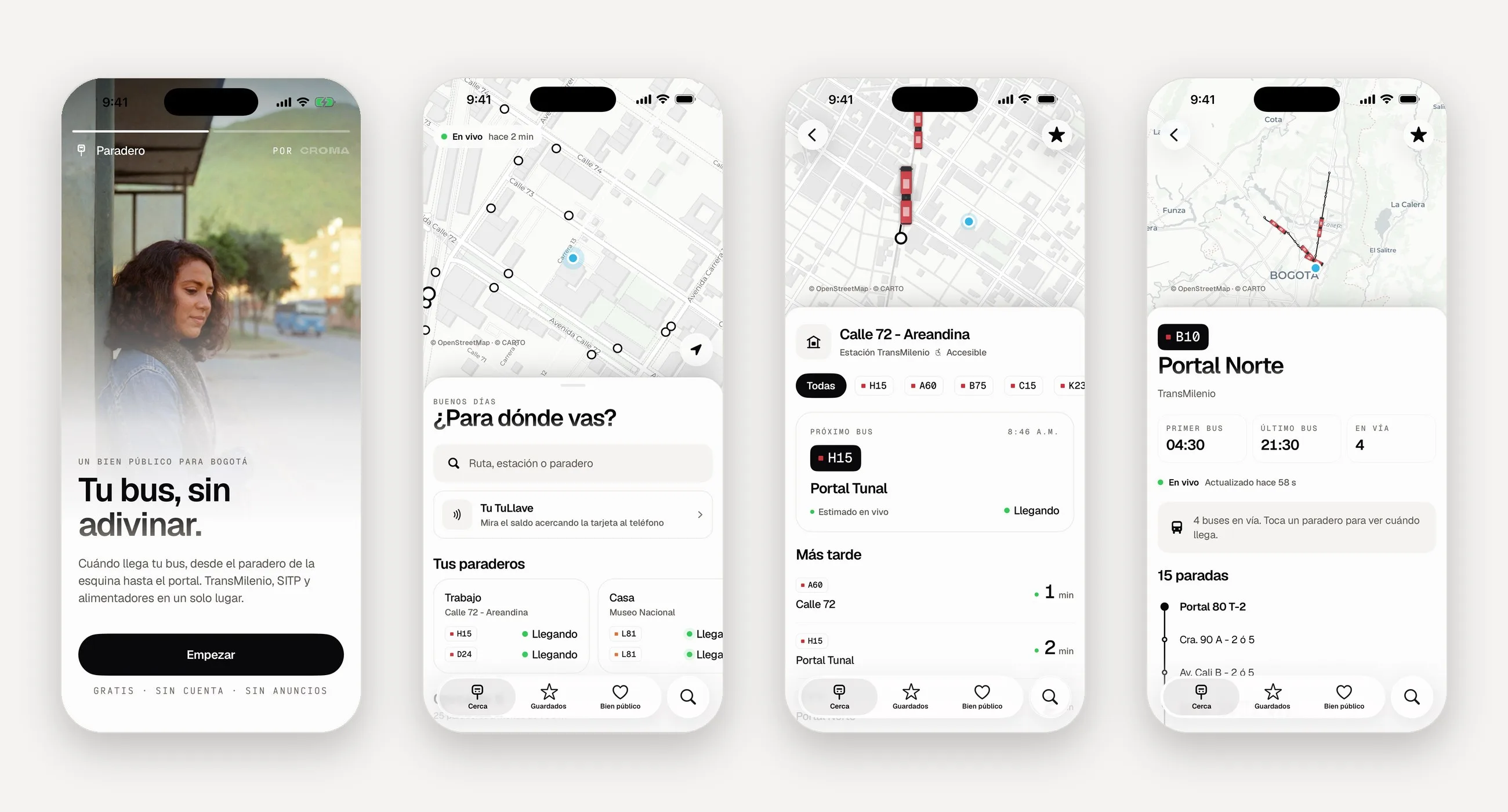
Paradero is the open app for getting around Bogotá: TransMilenio, SITP, feeder buses and TransMiCable in one place. It tells you how long until your bus arrives, in large minutes, and always says whether the time is live or from the published timetable.
It started by listening. We published a map with TransMilenio buses moving live and received more than 150 comments. Almost none were about the data: they were about how hard it is to get around.
Free and without ads. Open data from TransMilenio. Not an official app of the city.
What we heard
Every feature answers something a daily rider told us.
What riders said
When does it get to my station?
What Paradero does
The next buses at each stop, in large minutes, and whether they are on time or late.
What riders said
The official app is hard to understand.
What Paradero does
One question per screen, large type, designed to be used with one hand.
What riders said
It does not update.
What Paradero does
It always says whether a time is live or scheduled, and never draws old buses as current.
Ventanilla · Colombia, El Salvador, Argentina
Whatever you need from the State starts here
Ventanilla is a civic assistant. You ask in your own words how to get a passport or license a business, and it answers with the steps, using official sources only and showing the source on every answer.
Every answer is checked against its sources before it is shown. It runs in three countries today, each with the sources of its own State, and it is built to add more.
Free, anonymous and open source under the MIT license. An independent project: not an official site of any government.
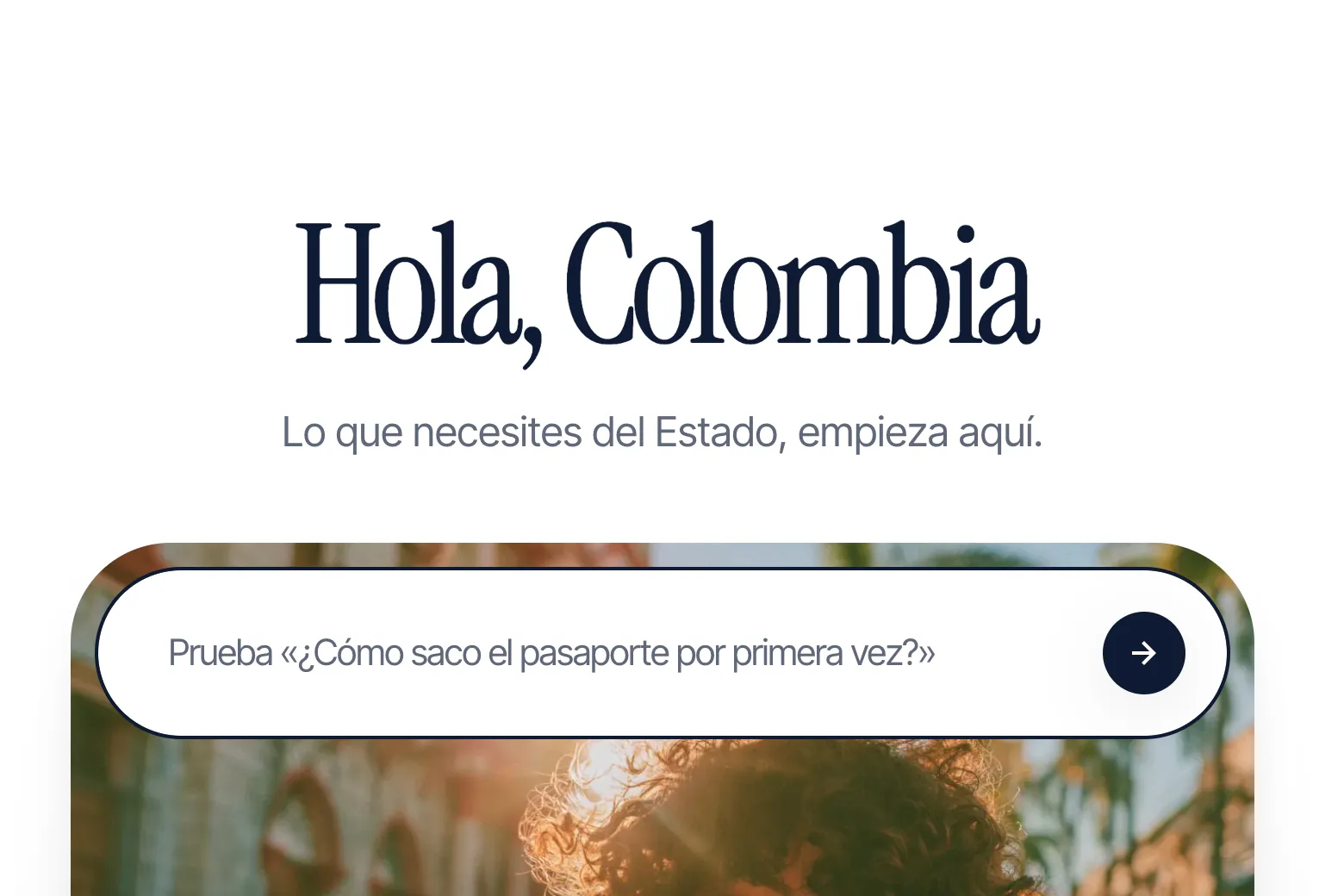
Colombia
Passports and other Colombian government services, explained with their official sources.
gov.usecroma.comOpen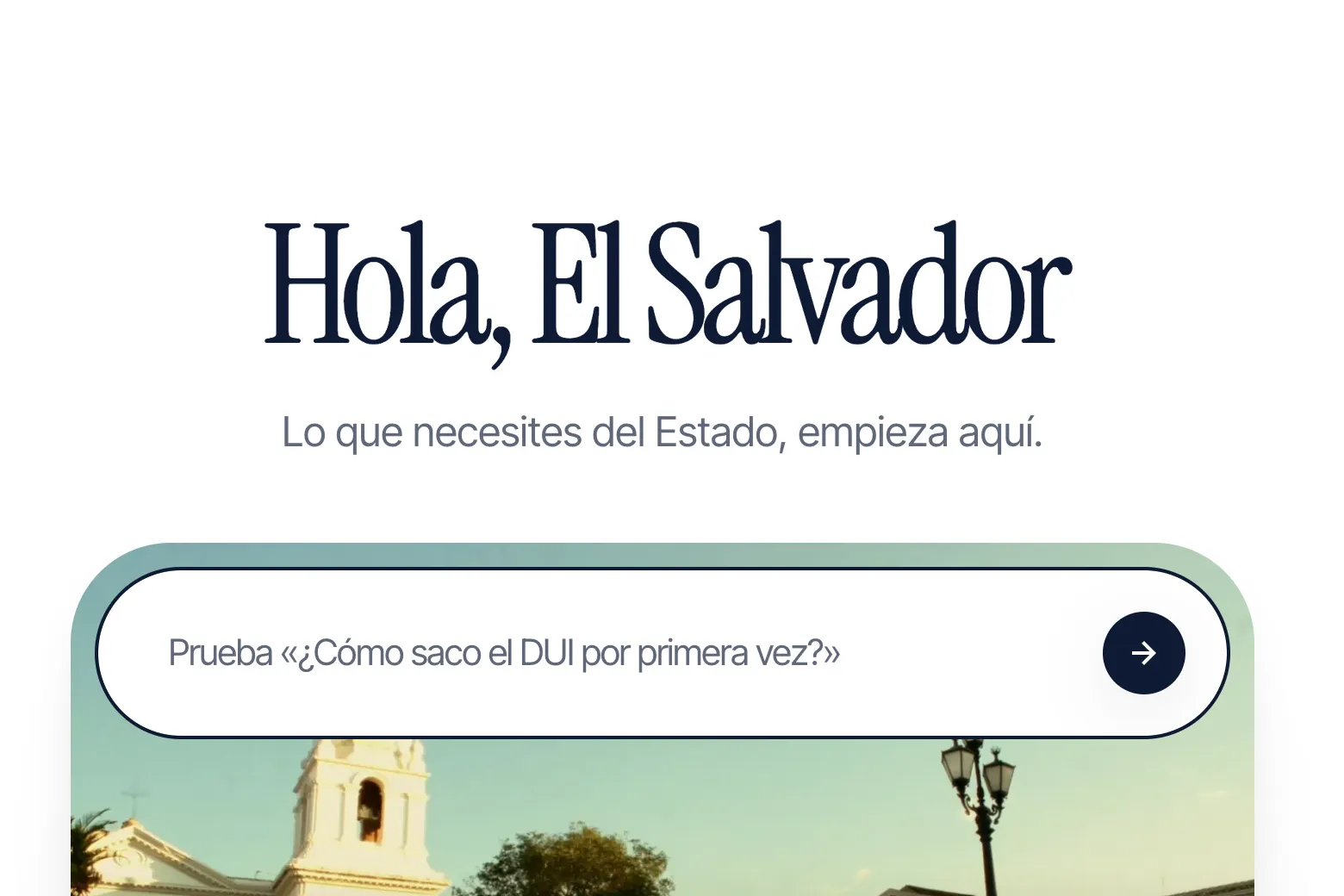
El Salvador
The national ID and other Salvadoran government services, explained with their official sources.
sv.usecroma.comOpen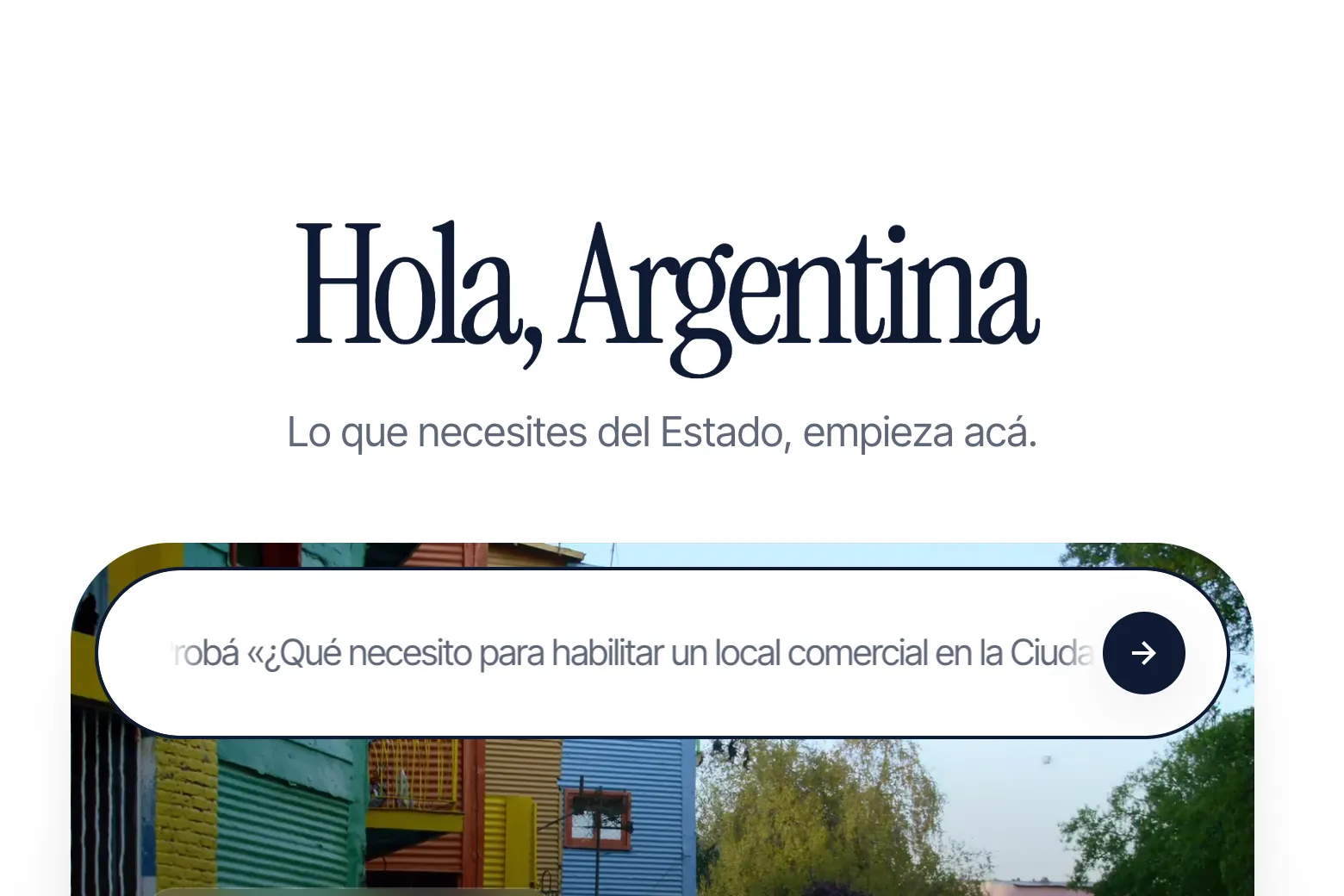
Argentina
National and City of Buenos Aires services. Every answer says which level it applies to.
ar.usecroma.comOpen
Tourism · El Salvador
El Salvador, up close
A tourism guide built on the country's official directory: surf beaches, volcanoes, colonial towns, places to stay, restaurants, certified guides and events, with a map and contact details.
You can browse it or ask in your own words, as in Ventanilla. It answers in the language you write in.
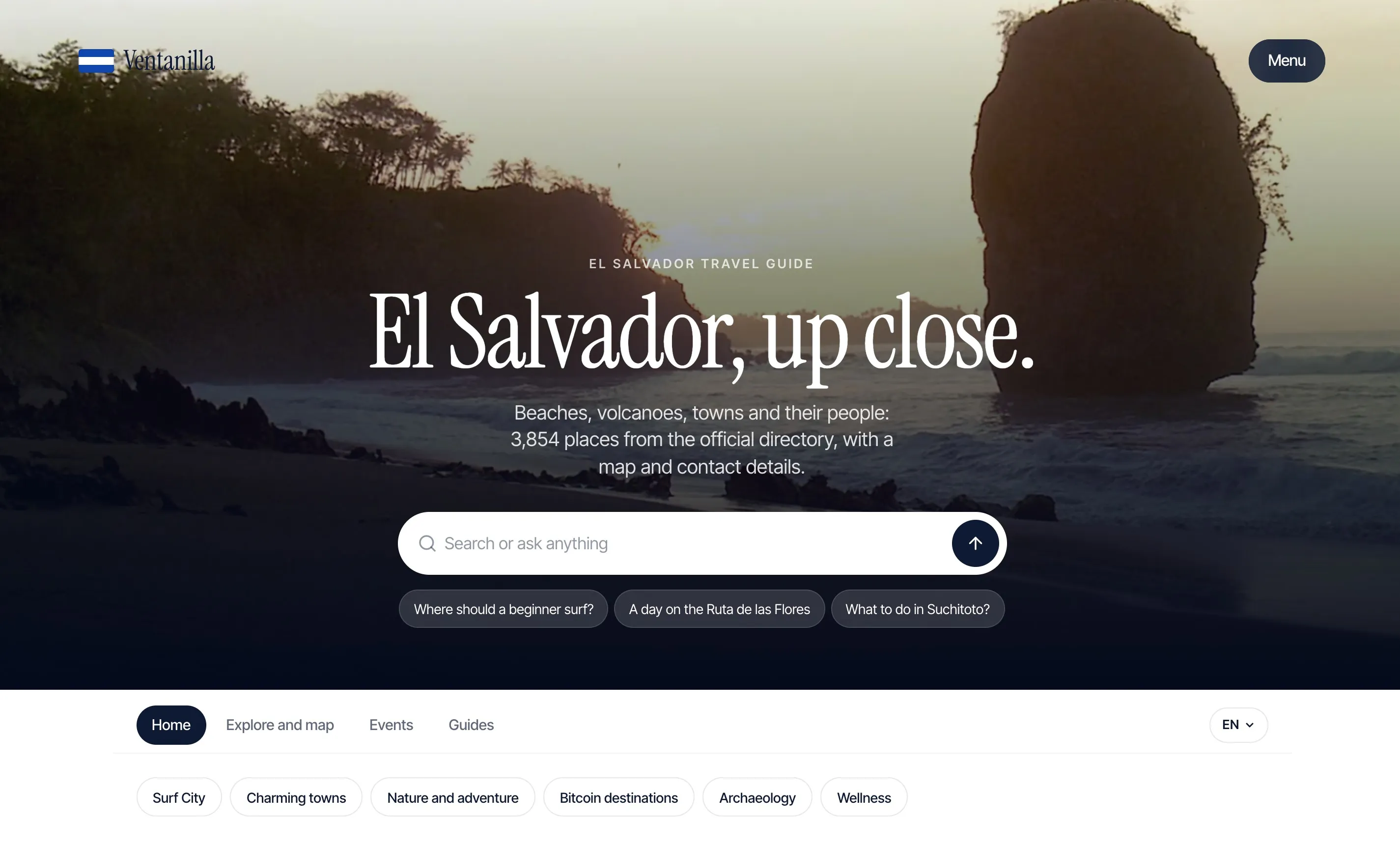
- 3,854
- places from the official directory
- 2,223
- restaurants
- 511
- places to stay
- 4
- languages: Spanish, English, Portuguese and French
Free and with no account. An independent project: not an official site of the Government of El Salvador.
Principles
Public software can feel as cared for as the best in the world
Six promises every Croma public good keeps.
- 01
Open
The code is public and openly licensed. A common good should not ask permission to be used.
- 02
No advertising, ever
Nobody pays for your attention. No ads, no paid plans, no hidden features.
- 03
Private by design
No account and no personal data. Ventanilla is anonymous. In Paradero, location is not stored and leaves the phone rounded to a city block.
- 04
Honest about data
Every figure says where it comes from and how fresh it is. Ventanilla shows the official source on every answer.
- 05
For everyone
Plain language, the way a neighbour would say it. Paradero meets WCAG 2.2 AA, with screen readers, large text and high contrast.
- 06
Ready to hand over
Documented and designed so a public agency can adopt it, publish it under its own name and maintain it without depending on us.
Standard
Built on the Digital Public Goods Standard
Paradero is built to meet the nine indicators of the Digital Public Goods Standard. This is how it answers each one.
- 01
SDG relevance
SDG 11, target 11.2: accessible and affordable public transport. SDG 10: reduced inequalities.
- 02
Open license
MIT, the simplest way for an agency or its contractors to adopt the code without paperwork.
- 03
Clear ownership
Croma and its contributors, stated in the license.
- 04
Platform independence
Expo and React Native, MapLibre maps on OpenStreetMap. The data source can be swapped.
- 05
Documentation
A guide to run it, the product plan and instructions for contributors, all in the repository.
- 06
Data extraction
Open data from TransMilenio in GTFS and GTFS-Realtime. The project API answers in JSON.
- 07
Privacy and law
It collects no personal data. Designed for Colombia's data protection law, Ley 1581 de 2012.
- 08
Standards
GTFS, GTFS-Realtime, OpenStreetMap, WCAG 2.2 AA and the iOS and Android accessibility guidelines.
- 09
Do no harm
No ads, no tracking, no personal data and no timetable times presented as live.
Paradero is not yet listed in the Digital Public Goods Alliance registry. Our goal is to apply.
For governments
Adopt it and publish it under your name
Any public agency can adopt these tools, at no cost and with no conditions. Paradero is already offered to the City of Bogotá, its mobility department and TransMilenio S.A.
- 1
Write to us
An email to hi@usecroma.com is enough. We talk about what your agency needs.
- 2
We support the handover
Deployment, documentation, store accounts and whatever it takes for it to run without depending on us.
- 3
It is yours
The agency publishes it under its own name, maintains it and improves it. The code stays open for everyone.
FAQ
Frequently asked questions
What is a digital public good?
It is open software, data or content that respects privacy and the law, is designed to do no harm and helps reach the Sustainable Development Goals. The Digital Public Goods Standard defines it with nine indicators.
Are these official government tools?
No. Paradero and Ventanilla are independent projects by Croma. Paradero uses TransMilenio's open data and Ventanilla answers from official sources only. Both are available for public agencies that want to adopt them.
Which countries do they work in?
Ventanilla works in Colombia, El Salvador and Argentina, each with the official sources of its own country. The tourism guide covers El Salvador in Spanish, English, Portuguese and French. Paradero works in Bogotá. Both are built to add cities and countries.
How much does it cost?
Nothing. Paradero and Ventanilla are free and have no ads. Adopting them also has no cost for a public agency.
Is Paradero listed in the Digital Public Goods Alliance registry?
Not yet. It is built to meet the nine indicators of the standard and our goal is to apply to the registry.
What data does Paradero collect about me?
It asks for no account and collects no personal data. Location is requested with an explanation, used only while the app is open, never stored and leaves the phone rounded to a city block.
How does Croma relate to these public goods?
Croma is a company that works with data from public sources across Latin America. With digital public goods we give part of that work back as open tools for people and for governments.
How can I contribute?
If you design, code, work on accessibility or ride the bus every day and have an idea, open an issue in the Paradero or Ventanilla repository on GitHub. You can also report from the Paradero app without an account.

A common good should not ask permission to be used
If you work in a public agency, a city or an organization that looks after the commons, let us build the next one.